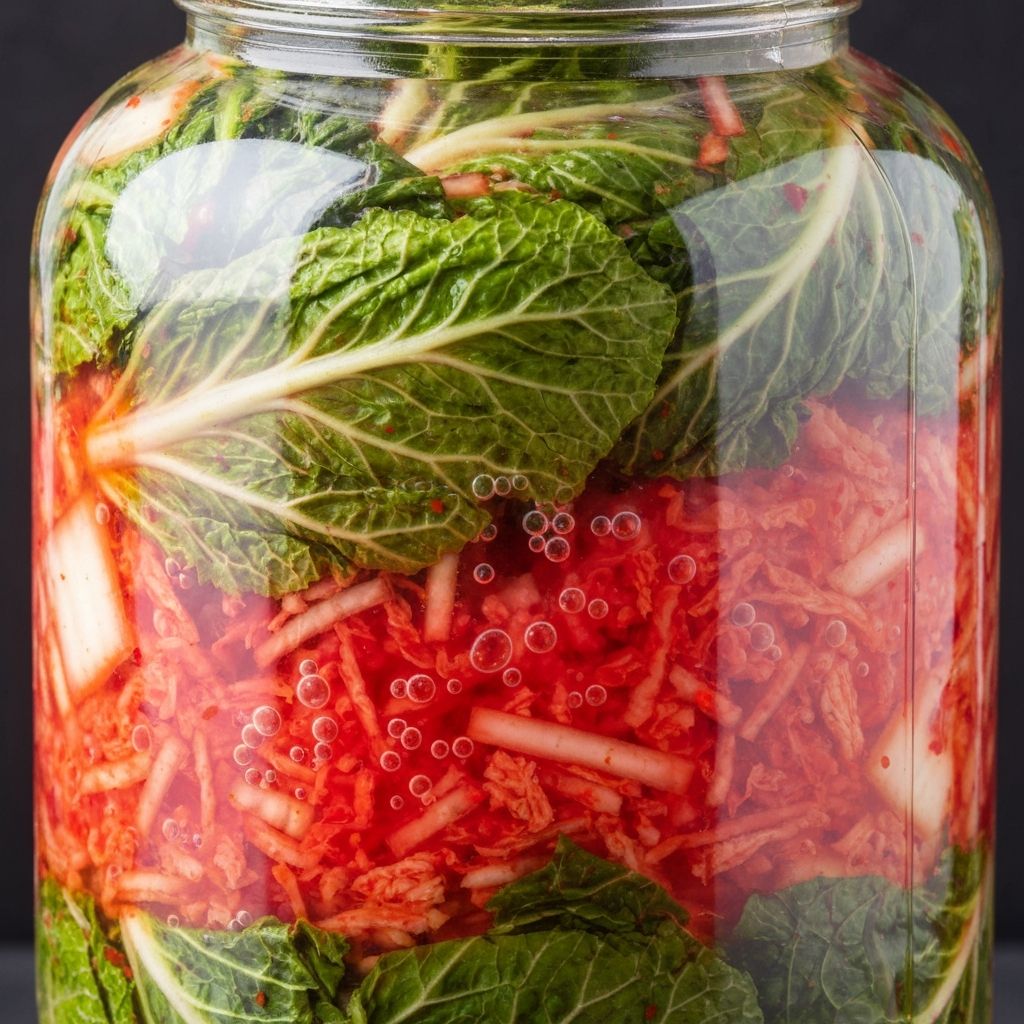
Sauerkraut & Kimchi
Traditional vegetable fermentation techniques
Lacto-fermentation is one of the oldest methods of food preservation. By creating an anaerobic environment with salt, beneficial bacteria convert sugars into lactic acid, preserving the vegetables and creating complex flavors. Sauerkraut and kimchi are classic examples of this technique.
Ingredients
- For Sauerkraut: 1 medium cabbage, 1.5 tablespoons sea salt
- For Kimchi: Napa cabbage, Korean red pepper flakes, garlic, ginger, fish sauce, scallions
Equipment
- Large mixing bowl
- Fermentation crock or mason jars
- Weights to keep vegetables submerged
- Sharp knife or mandoline
Step-by-Step Instructions
Prepare Vegetables
Shred or cut vegetables. For kimchi, salt cabbage separately for 2 hours first.
Add Salt
Massage salt into vegetables until they release liquid (brine). For kimchi, also add your paste.
Pack Tightly
Pack vegetables into your fermentation vessel, pressing down firmly to remove air pockets.
Submerge
Ensure vegetables are fully submerged under brine. Add weights if needed.
Ferment
Cover and ferment at room temperature. Taste daily after day 3 until desired flavor is reached.
Pro Tips
- •Use sea salt or kosher salt - avoid iodized salt
- •Keep vegetables submerged to prevent mold
- •Burp jars daily to release CO2 buildup
- •Cooler temperatures = slower, more complex fermentation
Troubleshooting
Soft, mushy texture
Temperature may be too warm or salt ratio too low
White film on surface (kahm yeast)
Skim off and ensure vegetables stay submerged
Too salty
Rinse before eating or reduce salt in next batch